

WORKSHOPS

Workshops 2026
Ruhr Labour Day took place on March 23, 2026 at the RWI - Leibniz Institute for Economic Research in Essen. The workshop brought together labour market researchers from the Ruhr area and beyond to foster exchange and collaboration. We welcomed submissions on a broad range of topics in labour economics, both empirical and theoretical. Each accepted paper was assigned a discussant who will provide detailed discussions and feedback. A networking event will follow the workshop. We warmly invited all interested researchers to attend, regardless of paper submission or selection.
Workshops 2025
The VUA-RWI Behavioral and Environmental Economics Workshop brought together some of the world’s leading empirical, behavioral, and environmental economists, in particular those working in the energy and transportation sectors. It consisted of 45-minute presentations with discussion, alongside shorter presentations by PhD students and early-career faculty.
Organizers:
Prof. Dr. Mark Andor (RWI), mark.andor@rwi-essen.de
Dr. Madeline Werthschulte (VU), m.werthschulte@vu.nl
With financial support from RWI and Vrije Universiteit Amsterdam.
The program can be found here.
Date: 10.09.2025
Place: WZB Berlin
The workshop is part of the Stimulating Prosocial Behavior (PROSOCIAL) project.
The PROSOCIAL project is a large collaborative project funded by Leibniz 2025-2028. The consortium consists of four institutional partners, namely, RWI Essen, WZB Berlin, University of Hamburg, and PIK, and many expert individual researchers like Maja Adena (WZB), Andreas Lange (U Hamburg), Lorenz Goette (NUS), René Bekkers (VU Amsterdam), Steffen Huck (WZB), Isabel Thielmann (MPI), and Linus Mattauch (PIK & TU Berlin).
As part of a broader scientific project, the workshop examines how individuals can be encouraged to act in ways that benefit others and society—whether through monetary and in-kind donations, volunteering, sustainability contributions, or life-saving behaviors such as blood and organ donation.
Grounded in a unifying conceptual framework, the project aims to design and test interventions that effectively promote prosocial behavior. The workshop therefore serves as a platform to discuss evidence from coordinated field experiments, theoretical models, and large-scale surveys. Central questions include: What motivates people to give? How do incentives shape charitable behavior? Why do donors sometimes favor less effective charities? And how does public support for prosocial and sustainable policies respond to information and policy design?
The event creates a collaborative space for scholars to exchange ideas, refine interventions, and lay the groundwork for a comprehensive meta-study. Participation is by invitation only. The program can be found here.
Workshop: Causal effects and mechanisms of research, technology and innovation policy
Date: 24 July 2025 and 25 July 2025
Location: Leibniz Office Berlin (Chausseestr. 111, 10115 Berlin)
Organiser: RWI Research Unit "Environment and Resources" and Friedrich Schiller University Jena
Impact analysis of current and future heating costs for private households – effects and adaptation responses to increased energy prices
On behalf of the BBSR
Workshop: Consequences of high utility costs
Date: 29 April 2025
Location: Ernst-Reuter-Haus, Berlin, Room M. 107
All information about the programme can be found here.
Core conference and local organisation: Prof. Dr. Hendrik Schmitz, Head of the RWI Competence Area ‘Health’
On 24 and 25 March 2025, the 17th Annual Conference of the German Health Economics Association took place at the University of Paderborn.
Keynotes:
- Corina Mommaerts (University of Wisconsin – Madison) on the topic ‘What can Economics say about Alzheimer's disease?’
- Friedrich Breyer (University of Konstanz) on the topic ‘Ageing, care expenditure and sustainable financing’
At the end of the annual conference, Kirsten Thommes (University of Paderborn) and Hendrik Jürges (Bergische Universität Wuppertal) took part in debate duels with members of the University of Münster Debating Club on the topics of care robots and health data.
Workshops 2024
Discussion event organised by the Alliance for a Socially Responsible Mobility Transition, the RWI - Leibniz Institute for Economic Research and the Mercator Foundation
How can we shape socially just mobility?- Current scientific findings and what they mean for transport policy
Date: Tuesday, 12 November 2024
Location: Leibniz Association, Chausseestraße 111, Berlin
Time: 6 p.m. to 8 p.m., followed by a get-together
The transport sector is facing major challenges in the course of the mobility transition. One of the relevant questions is how this change can be organised in a way that is both environmentally friendly and socially just.
The Alliance for a Socially Responsible Mobility Transition, the RWI - Leibniz Institute for Economic Research and the Mercator Foundation invite you to a discussion event on this topic. The Alliance for a Socially Responsible Mobility Transition will present concrete demands for a fair mobility transition from its social and political work, while the RWI - Leibniz Institute for Economic Research will contribute current findings from evidence-based mobility research. Together, we want to create a space for open dialogue and facilitate an exciting panel discussion. Our panellists will shed light on the topic from different perspectives. This is where different positions and interests in shaping the mobility transition in a socially responsible way come together.
In doing so, we want to focus on key questions: What characterises a socially just transport transition? How can sustainable and climate-friendly mobility be promoted? How are specific transport policy measures and their potential reform options perceived by the population? What barriers exist in access to sustainable mobility and how can they be overcome?
Date: 26th and 27th September 2024
Organizer: FDZ Ruhr at the RWI – Leibniz Institute for Economic Research
Location: RWI – Leibniz Institute for Economic Research, Essen, Germany
The third “Causal Inference with Spatial Data” workshop, organized by FDZ Ruhr and held at the RWI-Leibniz Institute for Economic Research in Essen, Germany, will bring together young and senior researchers who are working on causal inference problems requiring the use of spatial data. Starting at noon of the 26th September and finishing in the afternoon of the 27th of September, the two-day workshop will host presentations in its three broad focus areas in Housing & Urban Development, Environmental & Health, and Labor & Mobility including a PhD poster session as well as four keynote speaker presentations.
On September 13-14, 2024, CReAM (Centre for Research and Analysis of Migration at University College London) and RWI will host their 4th joint workshop on the ‘Economics of Migration’ in Essen, Germany. The aim of the workshop is to bring together young and experienced researchers to present and discuss their work in the broad field of migration economics. Both empirical and theoretical contributions are welcome. The workshop will be organized in a way to encourage interaction among the participants in a relaxed atmosphere.
The keynote lecture will be given by:
Joan Llull (IAE-CSIC, Barcelona School of Economics)
Researchers interested in participating are invited to submit a paper (preferred) or an extended abstract in pdf format to migrationworkshop@rwi-essen.de by June 1, 2024.
For further information, see the Call for Papers.
We are pleased to announce the 9th Workshop on Experimental Economics for the Environment on the 10th and 11th of September 2024. The workshop will take place at the Ruhr University Bochum. We are very happy to welcome Astrid Dannenberg (University of Kassel), Lorenz Goette (National University of Singapore) and John List (University of Chicago) as keynote speakers.
We are building a programme to promote the contribution of experiments to environmental economics and policy. Priority will be given to early career researchers (PhD students/postdocs), but submissions from researchers at all career levels are welcome. We encourage submission of projects at all stages and will plan sessions with pre-analysis plans, preliminary results, and working papers.
Workshop date: 10th and 11th of September 2024
Organizer: RWI – Leibniz Institute for Economic Research
Location: Ruhr University Bochum
Call For Papers Deadline: 31st of May 2024
You can find more information here.
Date: February 8 to 9, 2024
With the financial support of RWI and Grenoble Ecole de Management
Workshops 2023
New approaches to research on philanthropy have deepened the understanding of giving behavior. They include the ascent of field experiments on fundraising where charities are perceived as active parties. Others include the influence of behavioral economics on our understanding of how social interactions affect donations. The channels through which people donate have recently changed as well. For example, the role of online activities like donation-based crowdfunding is increasing. The emergence of big data and machine learning enables identifying and targeting individual’s charitable tastes. There are still many open questions and finding answers to them requires new approaches. This workshop aims to bring together scholars in order to foster exchange on new methods in charitable giving research and strengthen the network between researchers in Europe and overseas.
Organizers
Dr. Maja Adena (WZB), maja.adena@wzb.eu
Prof. Dr. Steffen Huck (WZB), steffen.huck@wzb.eu
Dr. Mark Andor (RWI), mark.andor@rwi-essen.de
Workshops 2022
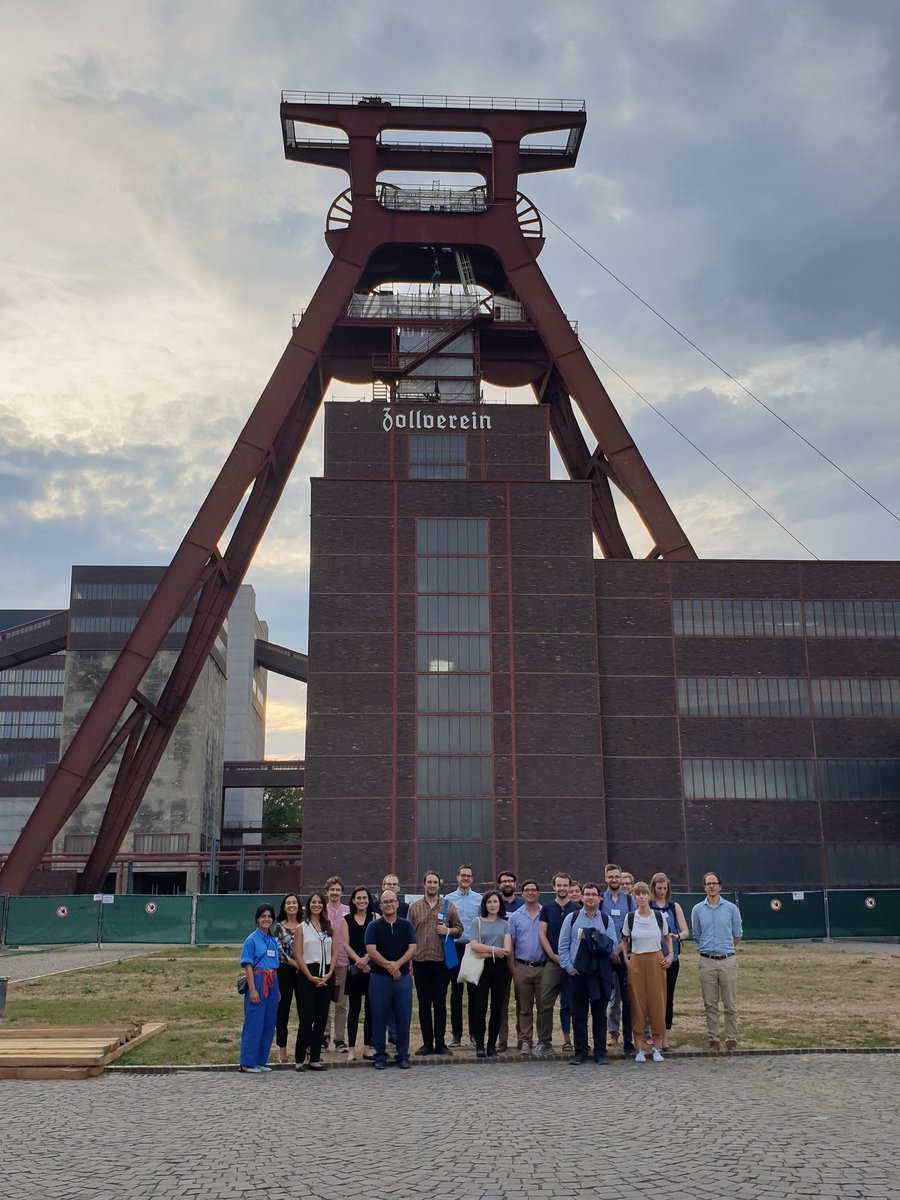
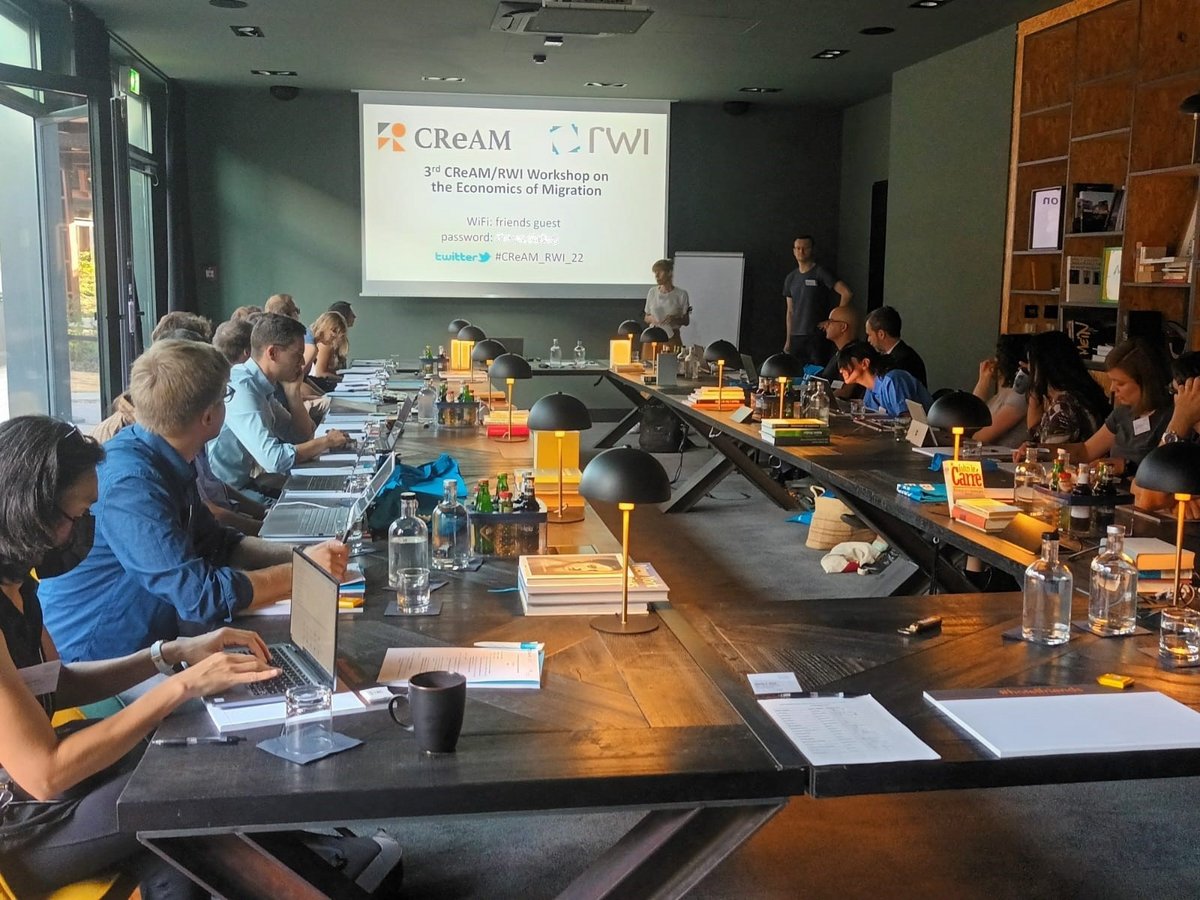
On September 5-6, 2022, CReAM (Centre for Research and Analysis of Migration at University College London) and RWI will host their 3rd joint workshop on the ‘Economics of Migration’ in Essen, Germany. The aim of the workshop is to bring together young and experienced researchers to present and discuss their work in the broad area of migration economics. Both empirical and theoretical contributions are welcome. The workshop will be organized in a manner designed to foster interaction among the participants in a relaxed atmosphere.
The keynote lectures will be given by:
Francisca Antman (University of Colorado Boulder)
Paolo Pinotti (Bocconi University)
Researchers interested in participating are invited to submit a paper (preferred) or an extended abstract in pdf format to migrationworkshop@rwi-essen.de by June 15, 2022.
For further information, see the Call for Papers.
The “Causal Inference with Spatial Data” workshop, organized by FDZ Ruhr and held at the RWI-Leibniz Institute for Economic Research in Essen, Germany, on 9th and 10th May 2022 brought together young and senior researchers who are working on causal inference problems requiring the use of spatial data. With its four broad focus areas in Housing Markets, Environment and Energy, Economic History, and Human Capital and Labor, the two-day workshop hosted twelve presentations- three in each session. Additionally, every session had its own keynote speaker.
The keynote speakers for our workshop were:
Gabriel Ahlfeldt, London School of Economics and Political Science, Housing Markets
Anna Alberini, University of Maryland, Environment and Energy
Mariaflavia Harari, University of Pennsylvania, Human Capital and Labor
Erik Hornung, University of Cologne, Economic History